
Achilles pain in runners: why the diagnosis matters

Achilles pain is one of the most common things we see in runners, and it's rarely as simple as "Achilles tendinopathy". Pain at the back of the heel can come from different structures in and around the tendon, and each one needs a different focus.
Rehab that works well for one can flare another, which is why getting the diagnosis right comes first.
Why the diagnosis matters
Doing the wrong exercises for the wrong structure is one of the most common reasons an Achilles hangs around for months. A deep calf stretch or a heel drop off a step, for example, is a normal part of some rehab plans, but it can aggravate an insertional problem. These are the three main presentations we see.
1. Mid-portion Achilles tendinopathy
This is pain and thickening in the tendon itself, usually a few centimetres above the heel bone. It's often stiff and sore first thing in the morning or at the start of a run, then eases as it warms up.
Mid-portion problems usually respond well to progressive loading. That means building from isometric holds through to heavier, slower calf strength work, with your running load managed sensibly alongside.
2. Insertional Achilles tendinopathy
This is pain right where the tendon attaches to the heel bone. This part of the tendon doesn't like compression, so positions that push the heel down and the ankle up, like deep calf stretches and drops off the edge of a step, can flare it.
It still needs loading, but the range and the exercise choices need to be managed carefully.
3. Paratenon (sheath) involvement
The paratenon is the sheath that surrounds the tendon. When it's irritated you might notice swelling, warmth, or a creaky feeling as the ankle moves, and it's often more sore and irritable early on.
The focus is settling the irritation first, then building load back in gradually.
It can be more than one thing
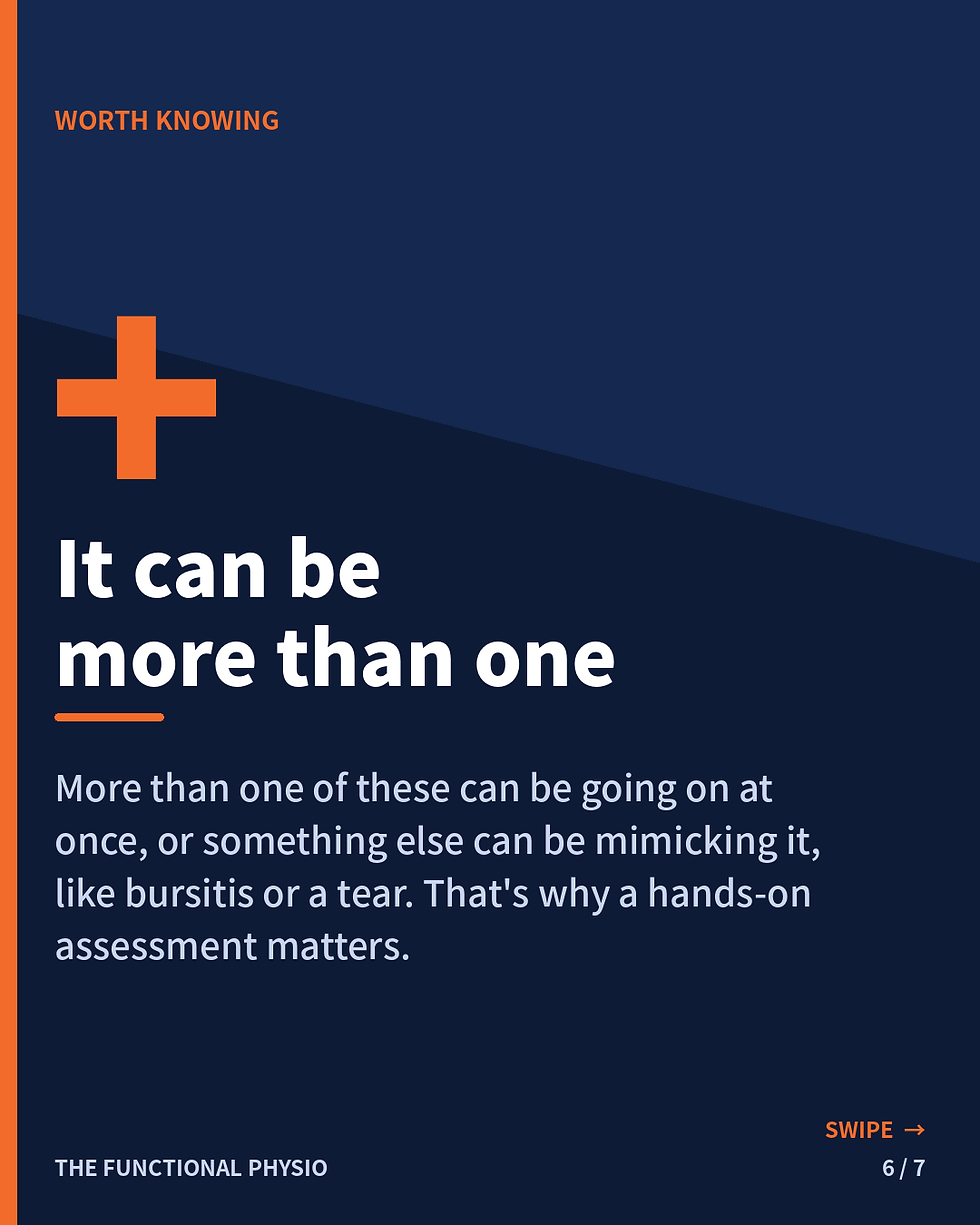
It's possible for more than one of these to be going on at once, or for something else to be mimicking an Achilles problem, like bursitis or a tear. That's why a hands-on assessment matters.
When to get it looked at

Book in if your heel or Achilles pain has lasted more than a couple of weeks, if it's stopping you from running, or if you've been rehabbing it for a while with no change. It may be the wrong plan for the wrong structure.
At The Functional Physio we work with runners on rehab, strength and performance, so we can work out what's going on and build a plan that fits.
Book here for a thorough assessment by one of our experienced team
This post is general information only and isn't a diagnosis. If you're in pain, get it assessed.


Comments